

Irish Traditional Music Instruments: Complete Guide
Irish Traditional Music Instruments: Complete Guide
The Instruments used in Irish Traditional Music
Irish traditional music instruments like the bodhrán, uilleann pipes, fiddle, and tin whistle each carry centuries of heritage and distinct playing styles. Whether you visit Dublin for a musical tour or pick up a tin whistle yourself, understanding these instruments transforms how you experience Irish culture and trad sessions.
If you're planning tours of Dublin and want to actually feel the Irish culture rather than just photograph it, start with the music. Irish traditional music instruments aren't museum pieces. They're alive, played nightly in pubs across the city - and after 33 years running Dublin's original musical pub tour, with close to half a million people joining us since 1993, we know that once you understand what you're hearing, a musical tour of Dublin becomes something else entirely.
What Instruments are Used in Irish Traditional Music?
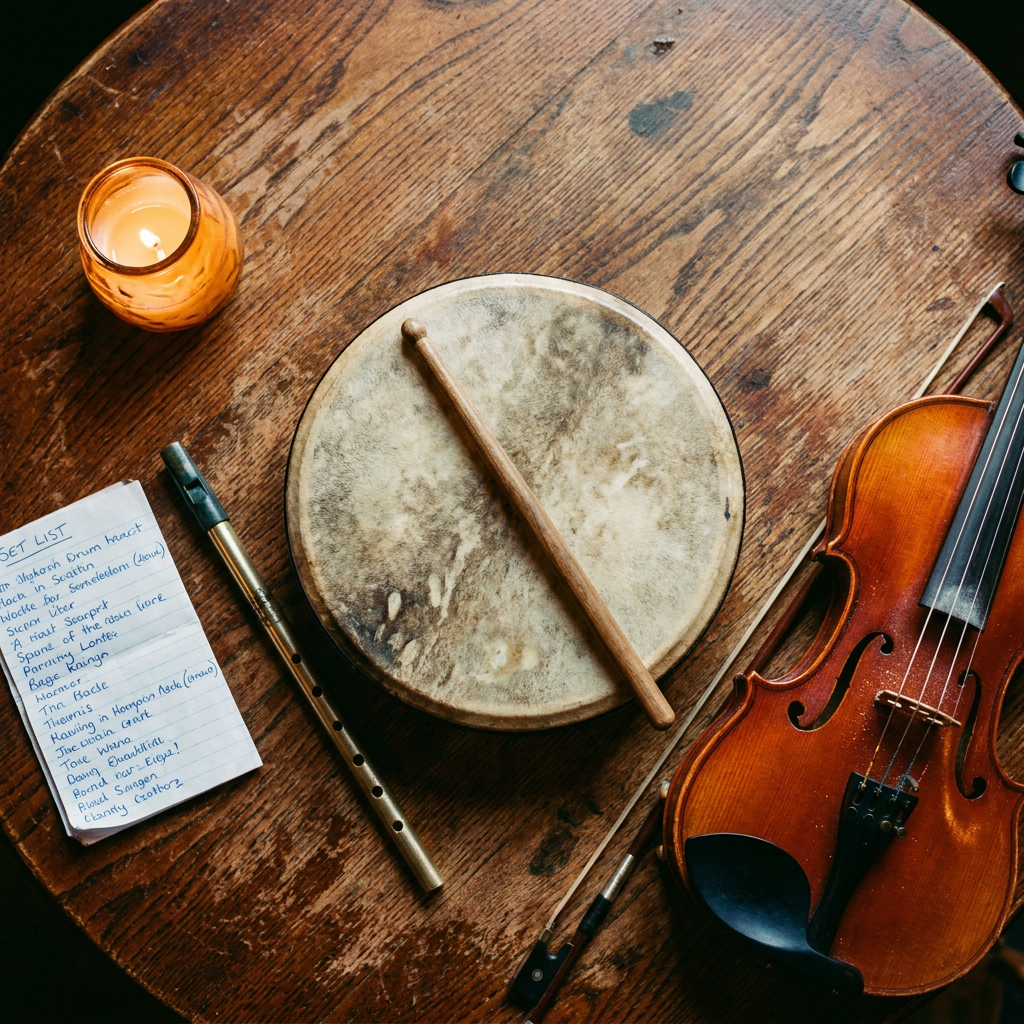
Irish traditional music uses a range of many instruments. We are going to focus on five in this blog: the bodhrán, uilleann pipes, fiddle, tin whistle, and the Irish harp. It is also common to hear concertina, accordion, banjo, bouzouki, guitar, mandolin and many more at a traditional Irish music session. Each brings its own voice to a session, and together they create the layered, energetic sound you'll hear in Dublin's pubs. The fiddle and uilleann pipes typically carry the melody, while the bodhrán and guitar provide rhythm and harmonic support.
How Is the Bodhrán Played Differently from Other Drums?
The bodhrán is played with a small wooden stick called a tipper, held in one hand while the other hand presses against the drum head from behind to change pitch and tone. Unlike most drums that produce a single note, the bodhrán player creates melodic variation by adjusting hand pressure, allowing it to complement rather than just keep time. This technique - developed primarily in the 20th century - makes the bodhrán unique among world percussion instruments and essential to modern trad sessions.
What Makes Uilleann Pipes Uniquely Irish?
Uilleann pipes are the only pipes played with a bellows strapped to the player's arm, operated by the elbow - "uilleann" means elbow in Irish. This design gives players precise control over air pressure, allowing for ornaments, grace notes, and dynamic expression impossible on Scottish or Northumbrian pipes. The uilleann pipes also feature a complex chanter (melody pipe) with a wider range, making them capable of playing full tunes with intricate variations that define Irish traditional music's sophisticated sound.
How Do Irish Fiddle Techniques Differ from Classical Violin?
Irish fiddle players use the same instrument as classical violinists but employ radically different techniques: they emphasize rhythmic drive with shorter, choppier bow strokes, use ornamentation like rolls and cuts to add texture, and prioritize feel and swing over precise intonation. Trad fiddlers often play "off the beat" intentionally, creating the lilting, dance-like quality that makes Irish music distinctive. The fiddle in trad sessions is about conversation and groove, not perfection - it's why a traditional player and a classical violinist sound like they're playing different instruments entirely.
Where Can Visitors Experience Authentic Irish Music in Dublin?
Dublin's best traditional music sessions happen nightly in pubs across Temple Bar, Smithfield, and the Liberties - venues like The Brazen Head, O'Donoghue's, and Kehoe's host regular trad sessions where locals and visitors sit shoulder-to-shoulder with professional musicians. For a guided experience that puts you directly in the room with expert players and explains what you're hearing in real-time, the Musical Pub Crawl Dublin (running since 1993) combines three pubs with live performance and cultural context. The key to authentic sessions: arrive early, sit quietly, and let the music pull you in.
What Is the History Behind Each Traditional Irish Instrument?
The Irish harp is the oldest, appearing in manuscripts dating back to the 10th century and serving as a symbol of Irish identity for over a thousand years. The fiddle arrived in Ireland around the 17th century and was adapted to trad music during the 18th and 19th centuries. The tin whistle became popular in the 1800s as an affordable instrument for working-class musicians. The uilleann pipes developed over centuries, reaching their modern form by the 1700s. The bodhrán, originally a farm tool for winnowing grain, wasn't adopted into trad music until the 1960s, making it the newest addition to the traditional ensemble.
Book your musical pub crawl or dinner show experience today!
book nowBook Your Show
book now


